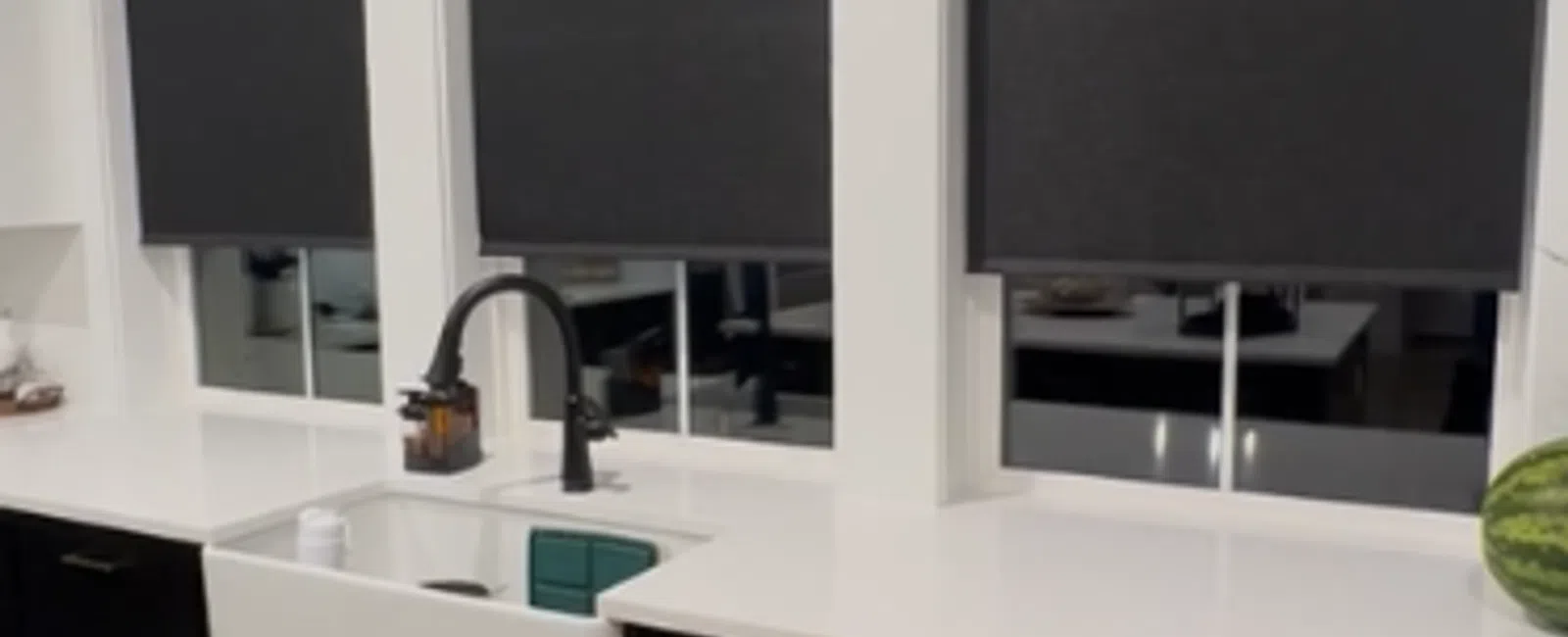
Motorization adds cost per window, and on a standard bedroom window within arm's reach, it is difficult to justify. On a two-story great room wall, a bank of west-facing windows that need to close every afternoon at four, or a shade behind a sectional nobody wants to climb over, the same upgrade pays for itself in the first month.
The honest answer depends far more on which windows are being covered than on the technology itself.
A window is worth automating when it is hard to reach, when operating it by hand takes real effort, or when it needs to move on a schedule nobody keeps manually. Two-story window walls require a ladder or an extension pole, which in practice means they never get operated at all and sit uncovered through the hottest part of the day for years. Wide banks of drapery panels mean walking the room and pulling each one individually, twice a day. Repeated pulling on a drapery panel is also what wears the fabric out long before the fabric itself would have given up.
In the DFW homes we work in, the same openings come up again and again:
- Two-story great room walls and transoms set above head height
- Wide banks of shades that would otherwise be operated one at a time
- Sliding patio doors and long drapery tracks
- Shades sitting behind a sectional, a bed, or a built-in
- Windows above a kitchen sink or a bathtub
- West-facing rooms that need shades down every afternoon in summer
Media rooms and primary bedrooms qualify on schedule rather than reach, since they run on a daily open-and-close cycle. A west-facing room in a DFW summer needs its shades down by mid-afternoon whether anyone is home or not.
Battery Or Hardwired Power
Both are available, and the choice usually comes down to whether the walls are open.
- Battery motors use a rechargeable pack that mounts in or near the headrail. They install in an existing home with no electrical work, which is why most retrofits go this route. The pack needs recharging periodically, and how often depends on how many times a day the treatment cycles and how much fabric the motor is moving. A large drapery panel that opens and closes twice daily draws more than a small shade that moves once.
- Hardwired motors run off building power and never need charging. They make sense during a build or a remodel while the walls are open, and on windows you would rather not reach again. Getting power to an existing second-story window after the drywall is up is the part that turns people toward batteries.
It is worth deciding per window rather than per house, since most homes end up with hardwired motors on the tall openings and battery motors everywhere else.
Control, Scheduling, And Smart Home Setup
Motorized treatments run from a handheld remote, a phone app, or a voice assistant, and most work with Alexa and Google Home. Schedules are where most homeowners get the value. Shades open with the morning and close against the afternoon sun automatically, without anyone thinking about it.
That automatic close is the part that shows up on a summer electric bill. Blocking sun before it loads a room with heat eases the demand on an air conditioner that is already running long cycles in July. The same logic applies outdoors, where motorized exterior patio shades set to drop as the sun swings west turn a patio that was unusable at four into a space people actually sit in.
Remotes still matter even in a fully connected house. A remote works when the internet is down, and a wall-mounted remote in a great room is faster than opening an app.
The Safety Argument For Cordless
Motorized treatments have no operating cords at all. Corded blinds and shades are a recognized strangulation hazard for young children, and cordless operation removes it entirely. Households with toddlers or pets often start looking at motorization for convenience and stay for this reason.
A manual cordless faux wood blind removes the cords without a motor, so the safety benefit is available at the lower price point. Motorization adds the automation on top.
Where Motorization Is Not Worth It
A single bedroom window at standing height, operated once a day, does not need a motor. Neither does a small bathroom window nobody touches. Rooms you rarely use, seldom-adjusted treatments, and rental properties where a battery pack becomes a maintenance question are all better served by a manual cordless lift.
Motorizing every window in a house is a way to spend a lot of money on convenience that only three or four openings actually need. Putting motors on the windows that are hard to reach and leaving the rest manual gets almost all of the benefit at a fraction of the cost.
Deciding During Your Consultation
Walk your house and note which windows you avoid adjusting. That list is usually short, and it is almost always the right list of windows to motorize. We confirm it during the in-home measure by checking reach, sun exposure, and how each room is used, then quote motorized and manual side by side per window so the difference is visible before you commit.
If cost is what is holding the motorized option back, financing is worth asking about during the consultation, with terms running to 0 percent APR for 18 months, subject to approved credit. Call (214) 934-2479 to book a free in-home consultation anywhere in Dallas, Fort Worth, and the surrounding communities.